
Client: Jefferies Finacial Group - Global Compliance
My Role: UX/UI Designer
Our main goal is helping Jefferies with streamlining their Investment Banking Control Room processes, workflows, and architecture.
Team Players:
Jefferies Steering Committee (IB / Compliance / IT / Madison)
Project Owner
SME
Tech Lead
Solution Arch
Tech BAs
UX/UI Designer
Salesforce Developer
ETL Developer
QA
Key Goals:
Build IB control room in Salesforce with the goal of future state system being intuitive & easily customizable
Address the current workflow and systems architecture challenges
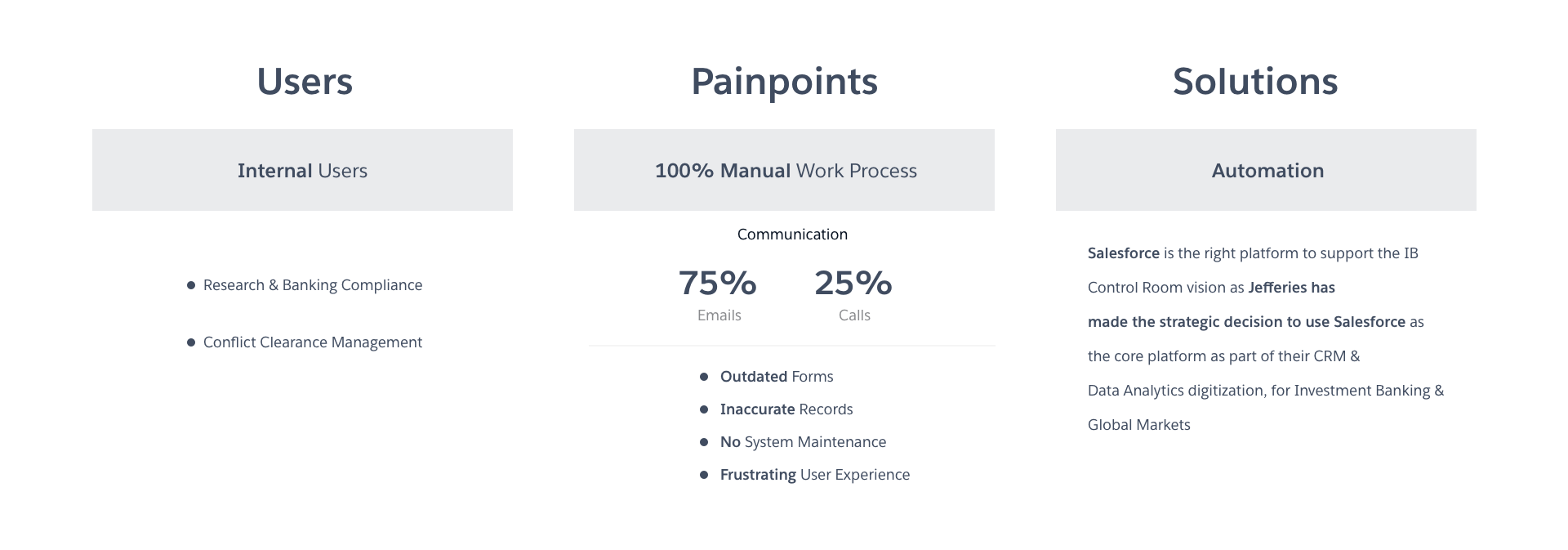
Current deal & MNPI workflow requires access to disparate systems, lacks ease of use/ customization, is redundant and intensive on manual data entry
Lack of integration with upstream CRM system
Reduce the manual efforts and the magnitude of business information being communicated through emails or phone calls
Allow users to proactively monitor restricted trading activity in real-time
Optimization of Process & Workshop Challenges
Streamline and automate the current manual processes and system architecture across Deal & MNPI Management, Data Integration, Conflicts Clearance, and Trade Surveillance.
The new system must be built for growth, be intuitive, and easily customizable
Current state workflow & architecture challenges must be addressed:
Current deal & MNPI workflow requires access to disparate systems, lacks ease of use and customization, is redundant and intensive on manual data entry
High magnitude and diversity of business information/events being communicated through emails or phone calls
Lack of integration with upstream CRM system
Limited Performance Tracking/Operational Workload Metrics Reporting
Limited ability to proactively monitor restricted trading activity
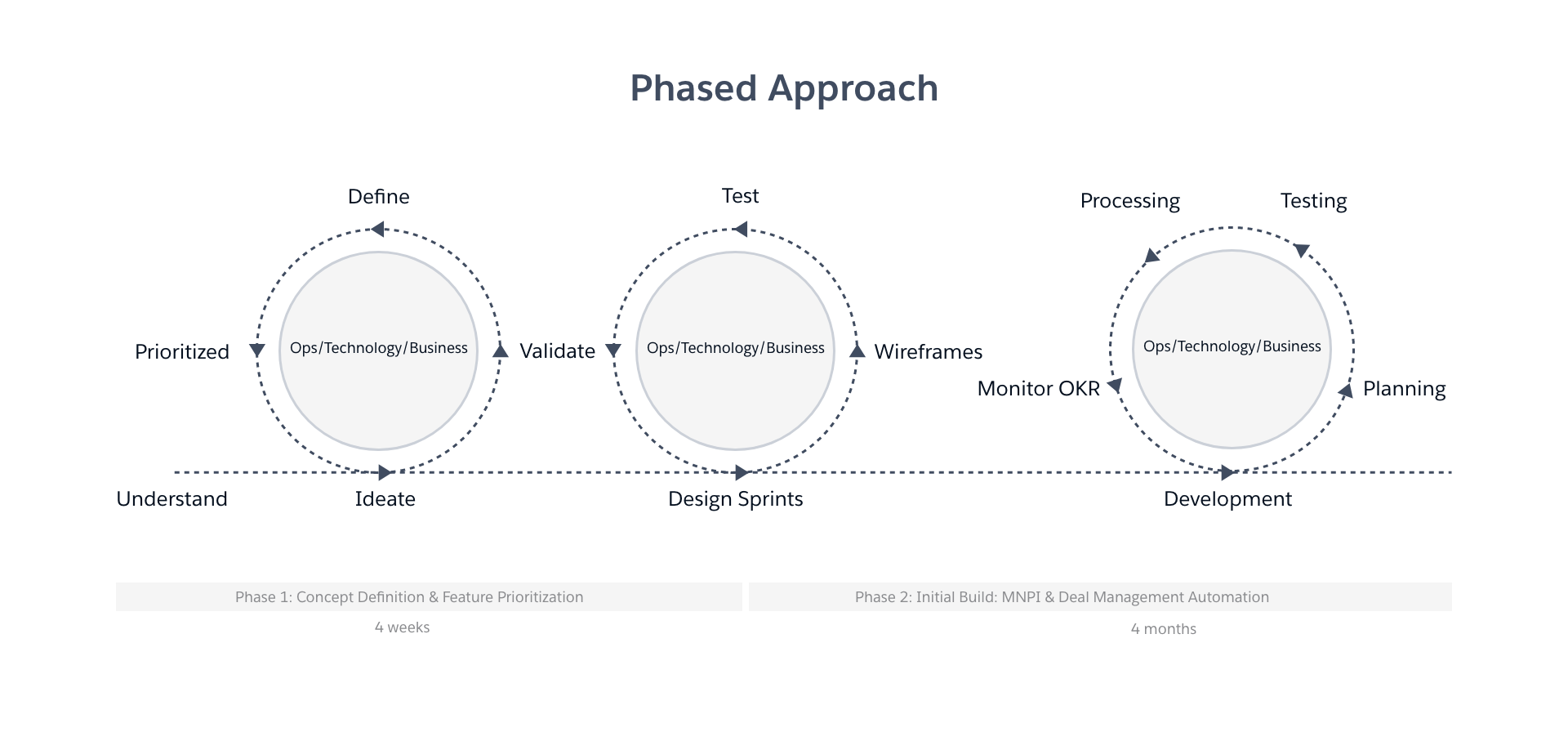
We will leverage the Design Thinking methodology to drive requirements validation and solutions.
Phase 1:
Current State Validation
Deep dive meeting to review current state pain points
Validate existing ‘Wish List’ requirements
Identify and prioritize “must-have” features
Solution Identification & Prototyping
Assess the feasibility and complexity of prioritized features
Develop a high-level solution design for the initial build
Target State Solution Design & Architecture
Analyze the impact on Tier1 / Salesforce security model and existing data & integration architecture
Map out upstream and downstream dependencies
Phase 2:
Build a core foundation in Salesforce
Onboard IB Control Room users
Build in-scope automated notifications
Test & deploy using Madison DevOps framework
Historical Data Migration
Finalize in-scope objects, fields, and source-to-target data mappings
Build Data Integrations
Build & test integration from Salesforce to CDW, using the MuleSoft platform
Benefits
One-stop-shop for Data Integration, Conflict Clearance and Trade Surveillance
Significantly reduce the number of manual steps involved by leveraging Salesforce’s powerful capabilities for creating rules-driven processes, notifications, and workflow automation
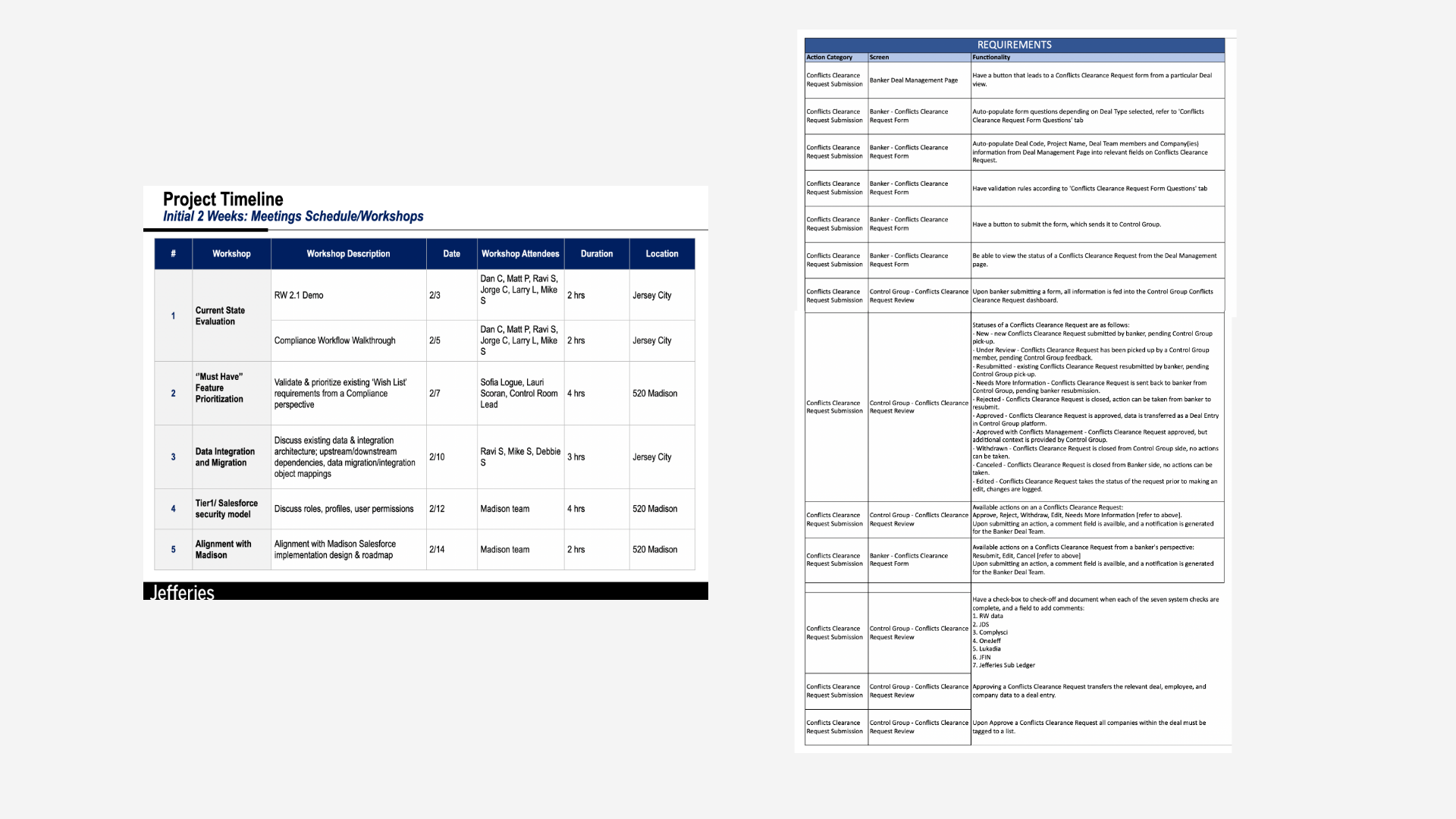
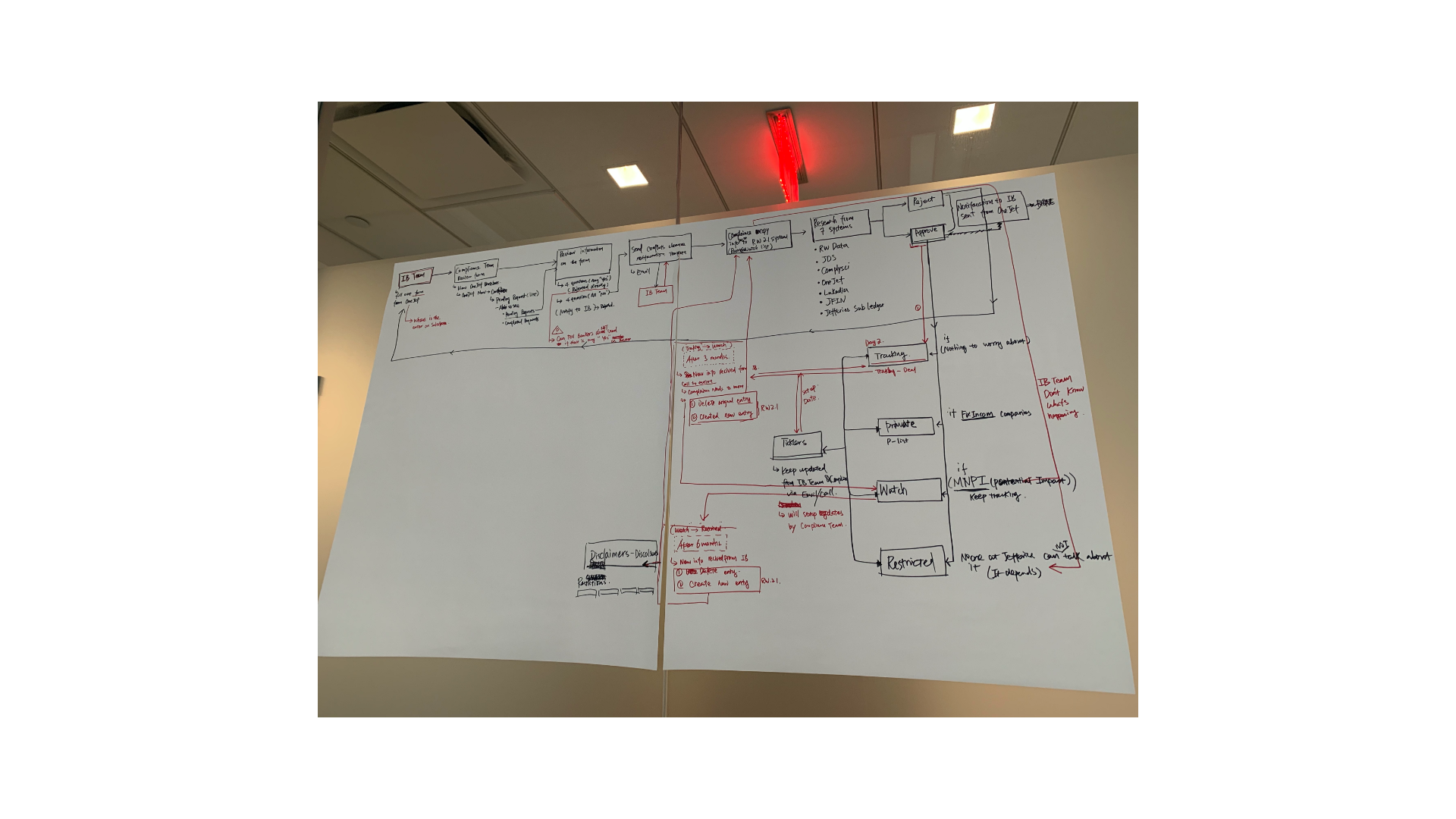
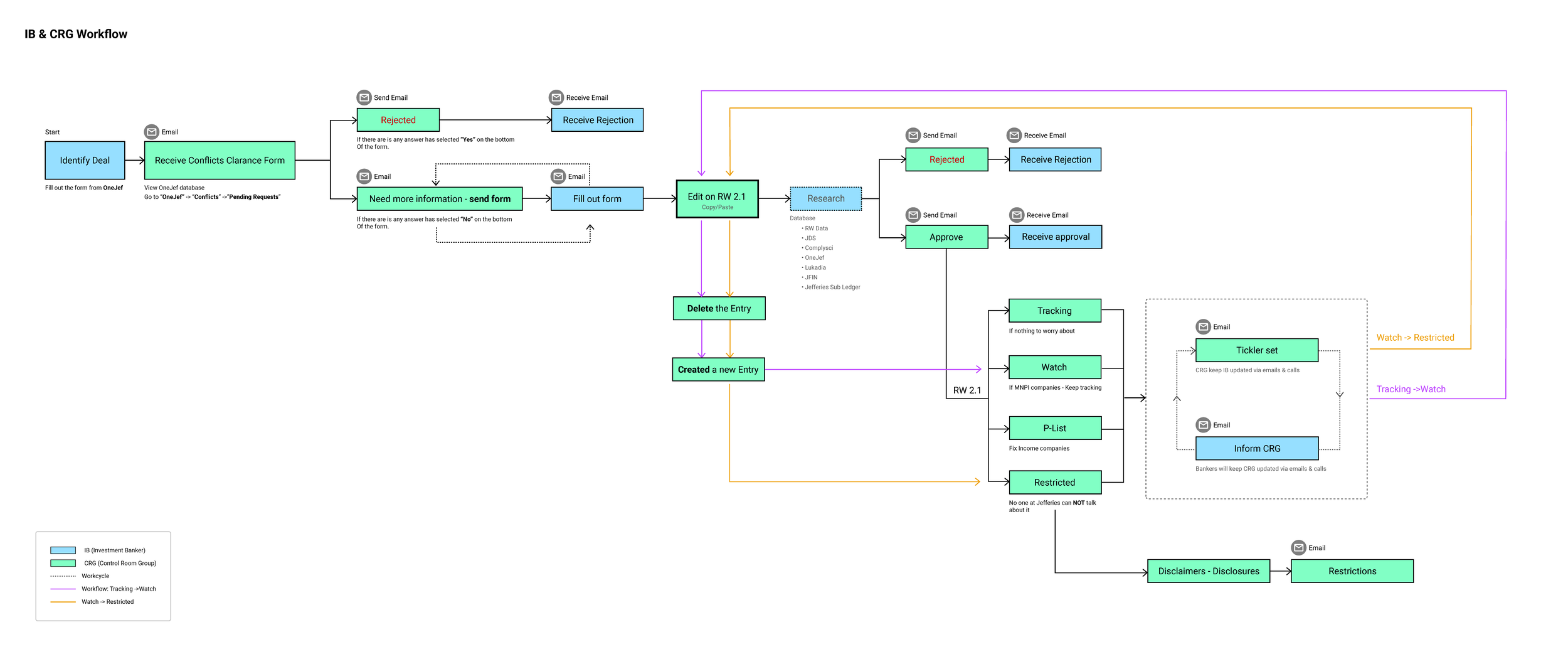
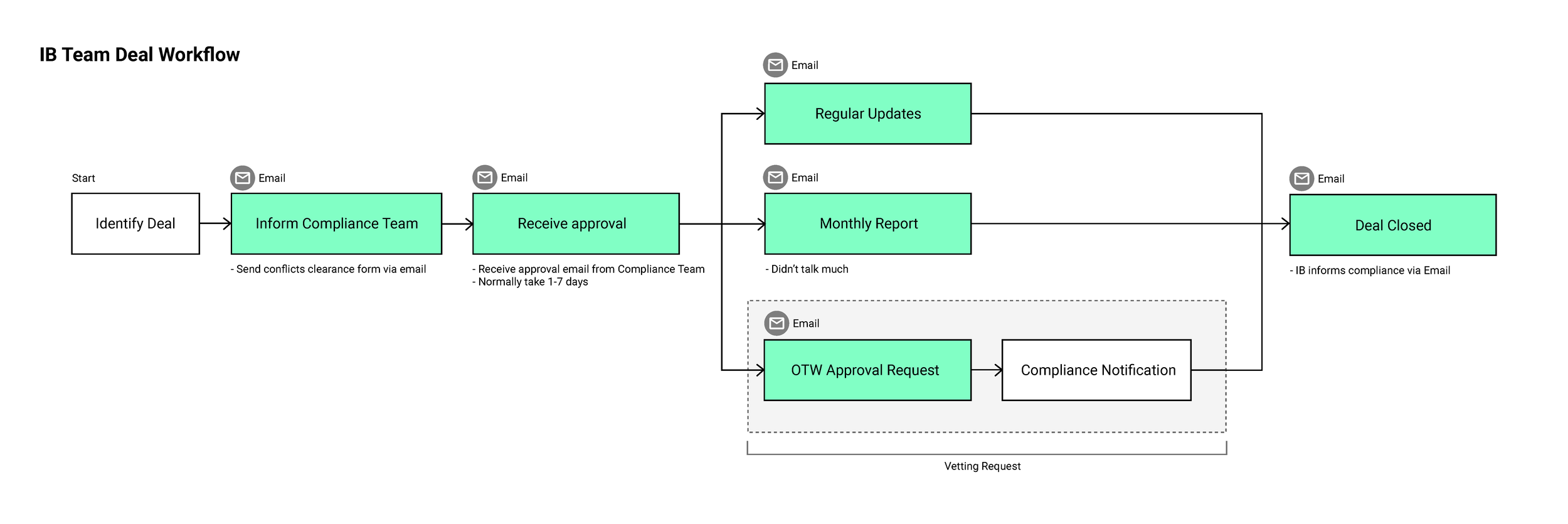
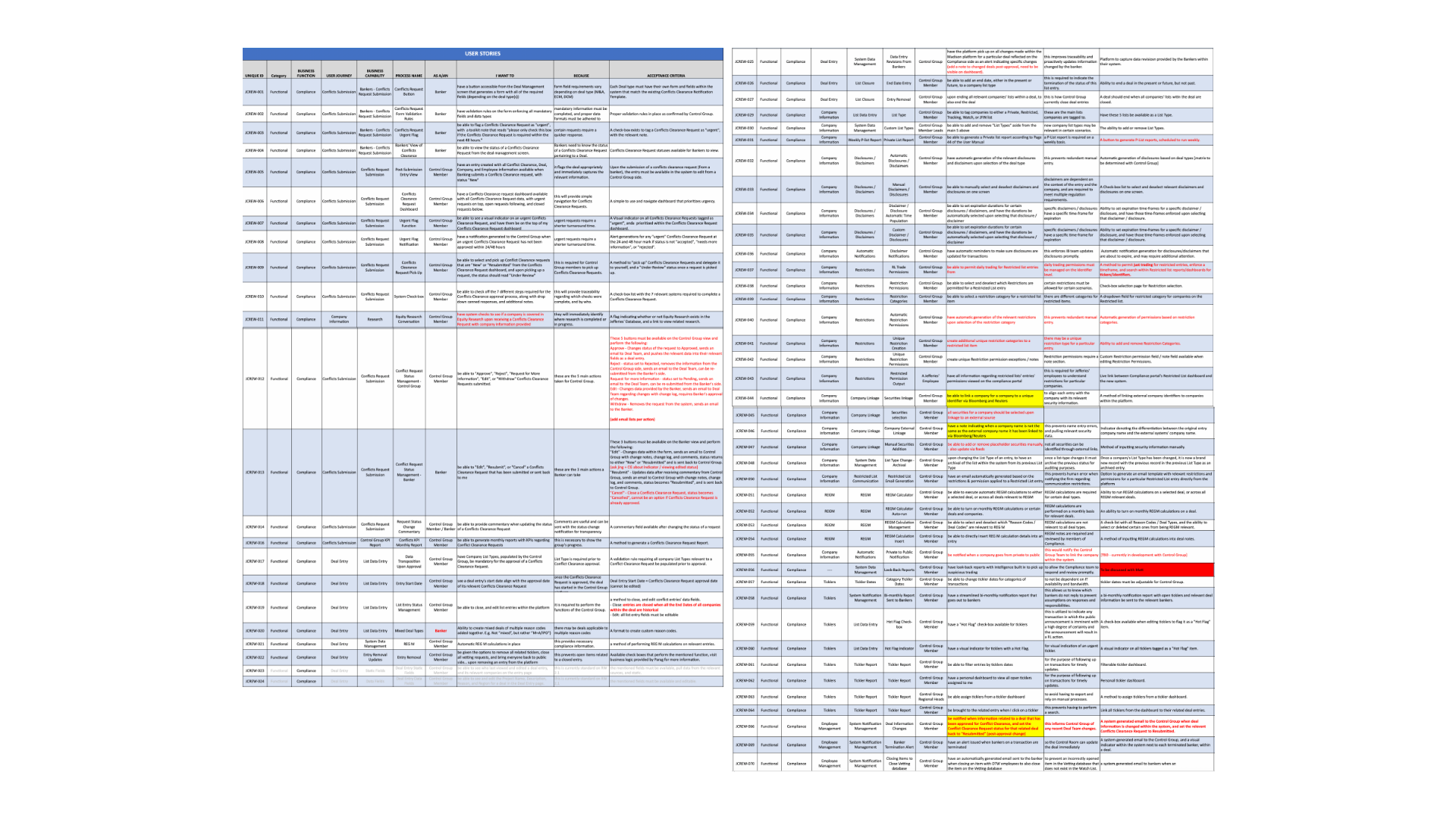
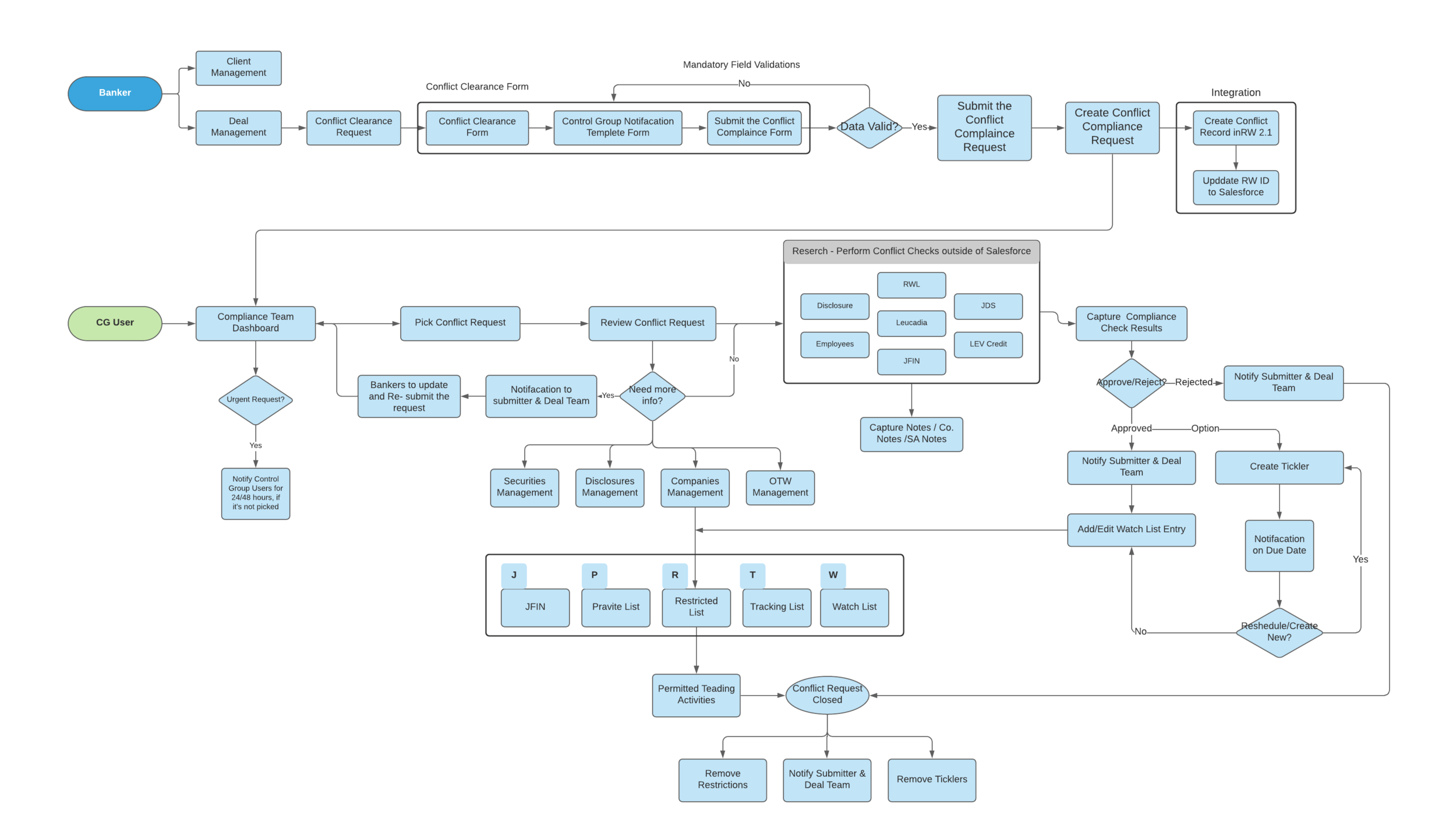
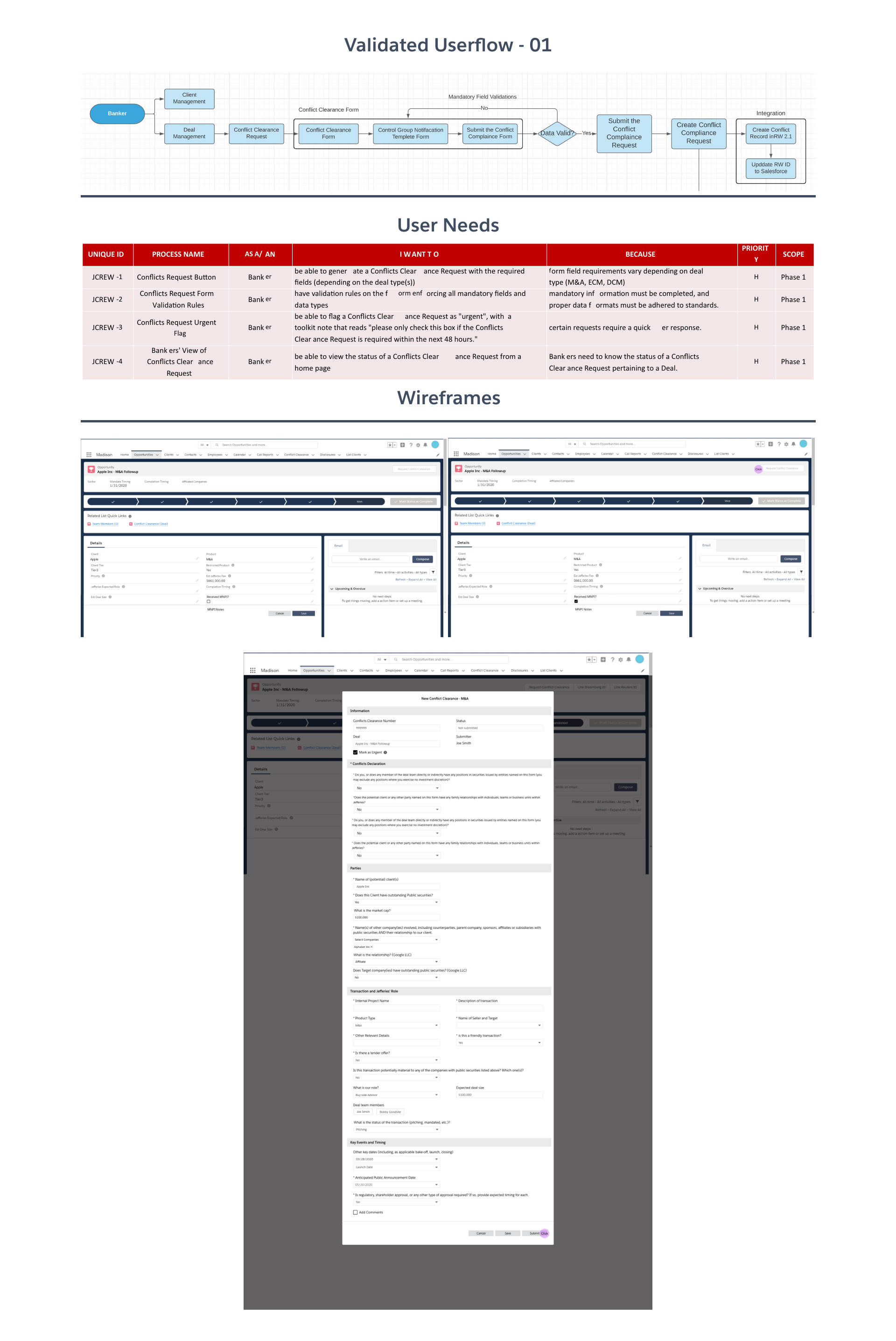
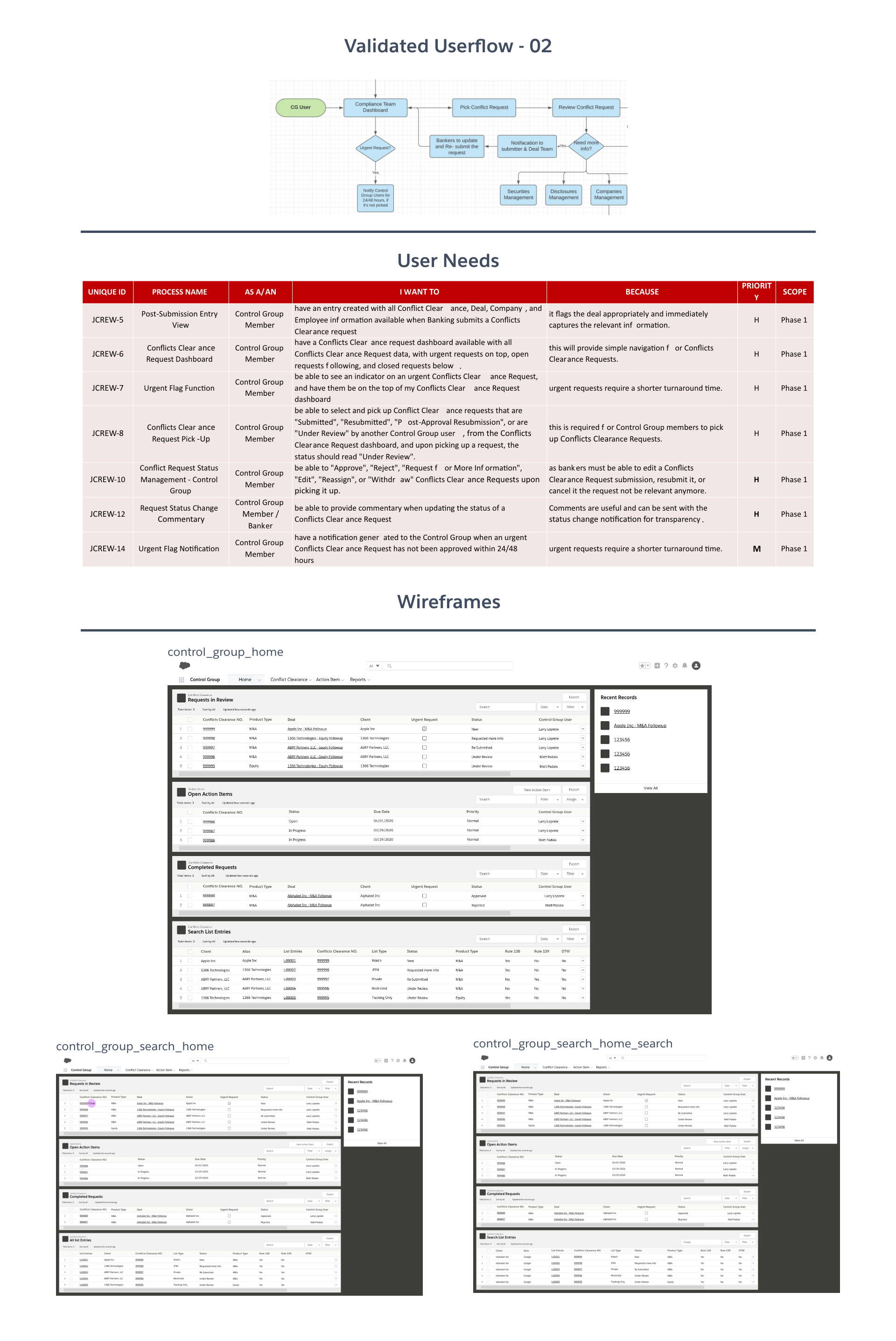
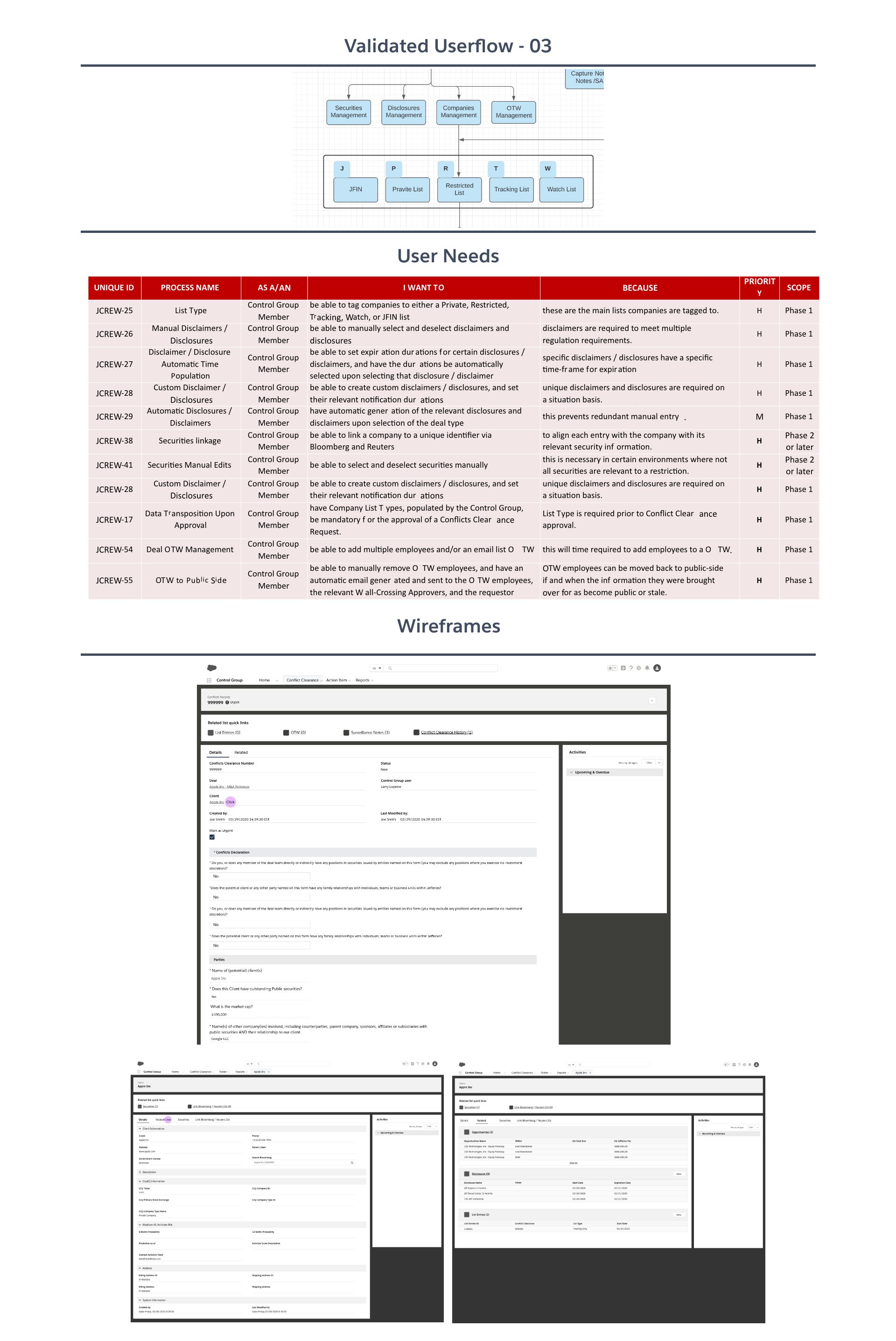
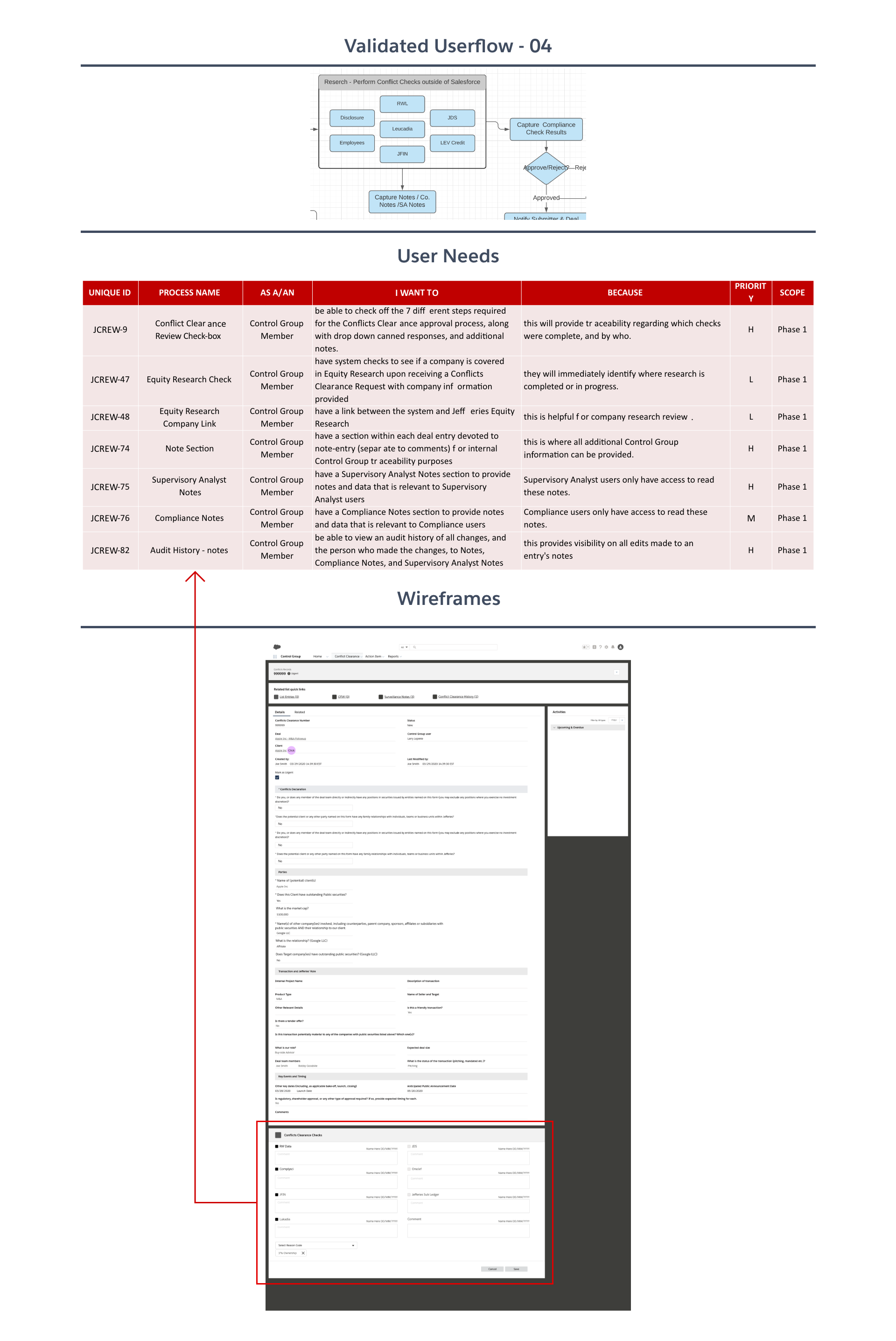
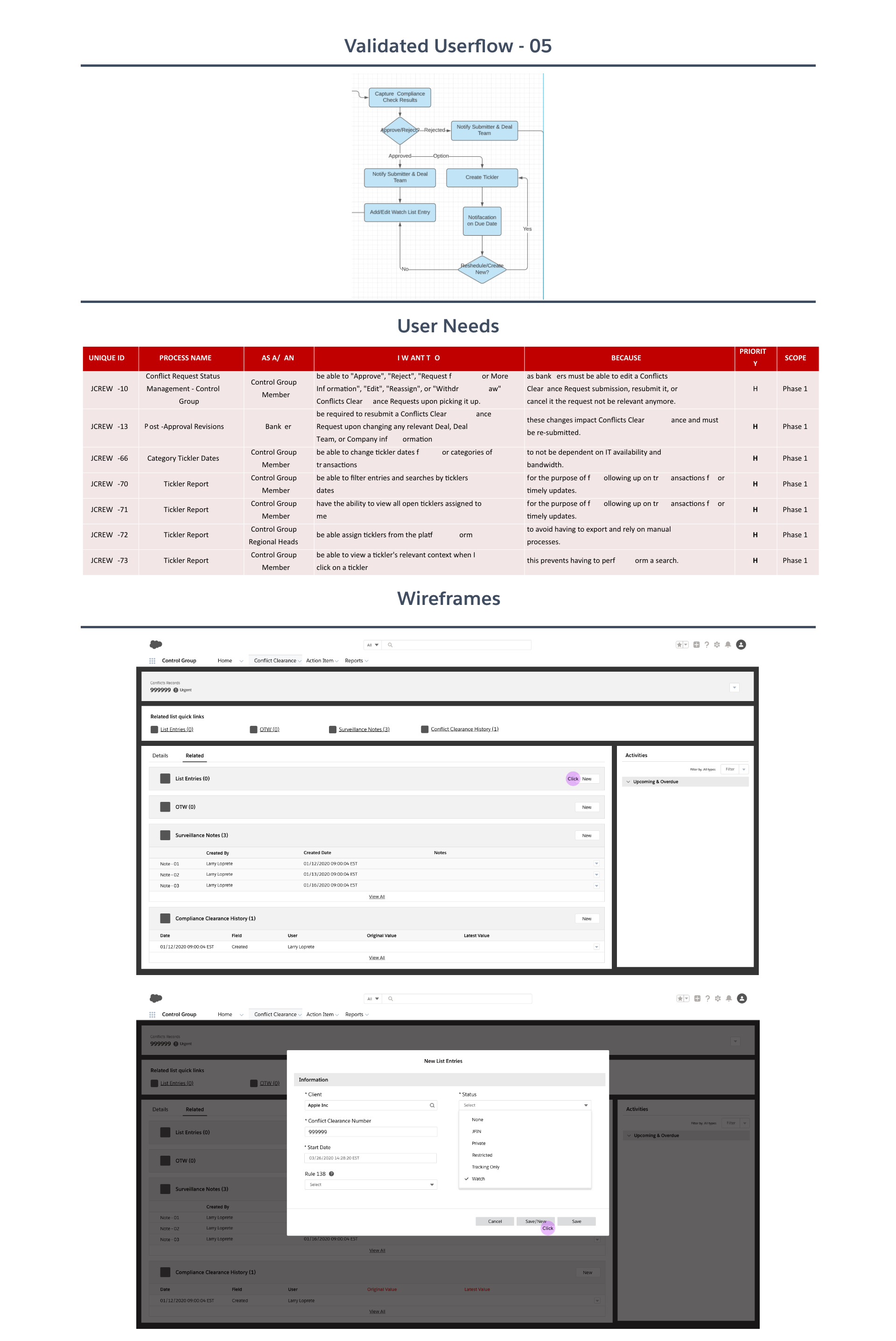
We ran through 5 main workshops with key stakeholders in order to gather information about the current state and build a user flow map. From this, we were able to collect and validate product requirements and ‘nice-to-have’ features, as well as understand our constraints (i.e. Salsforce).
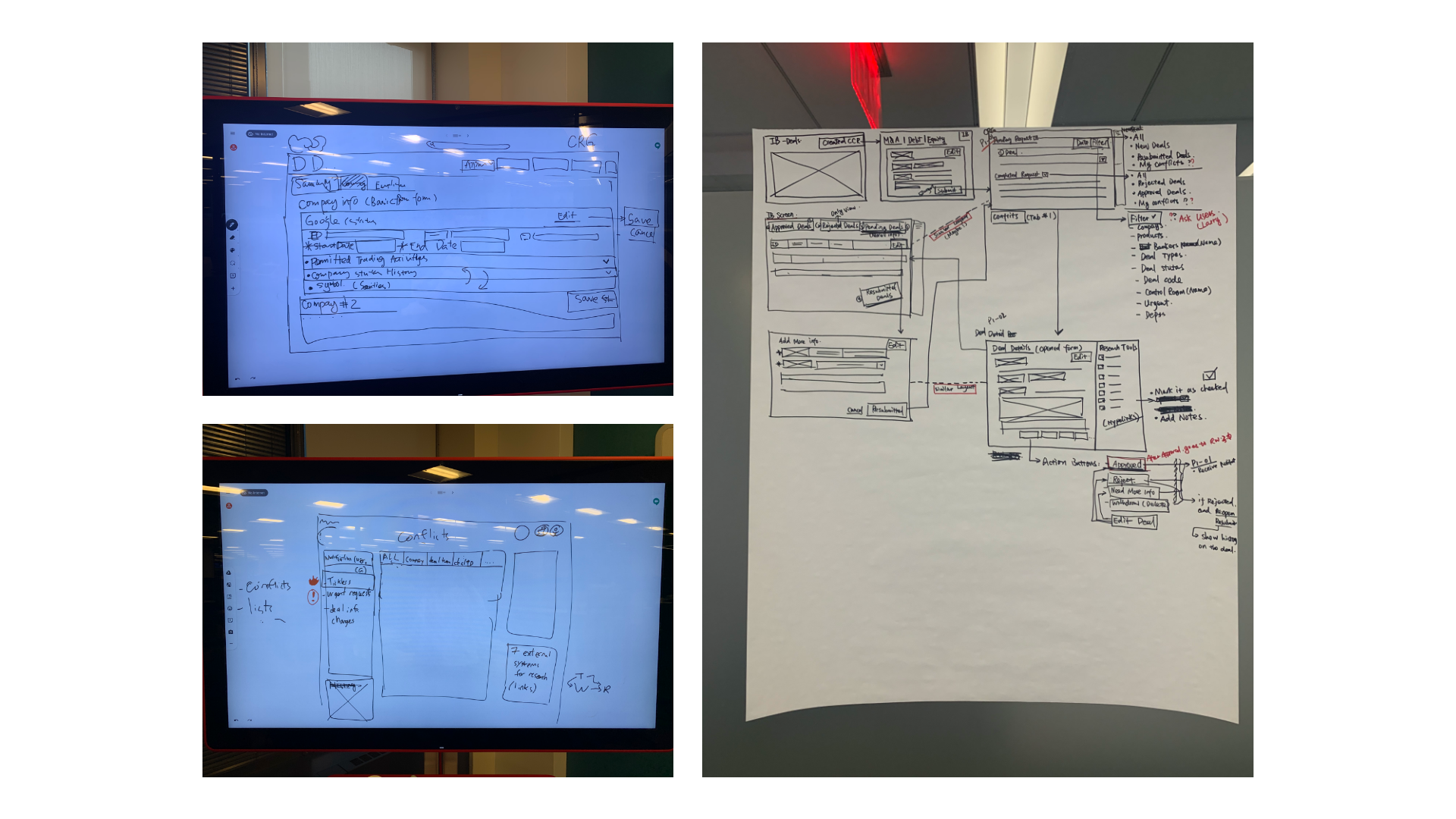
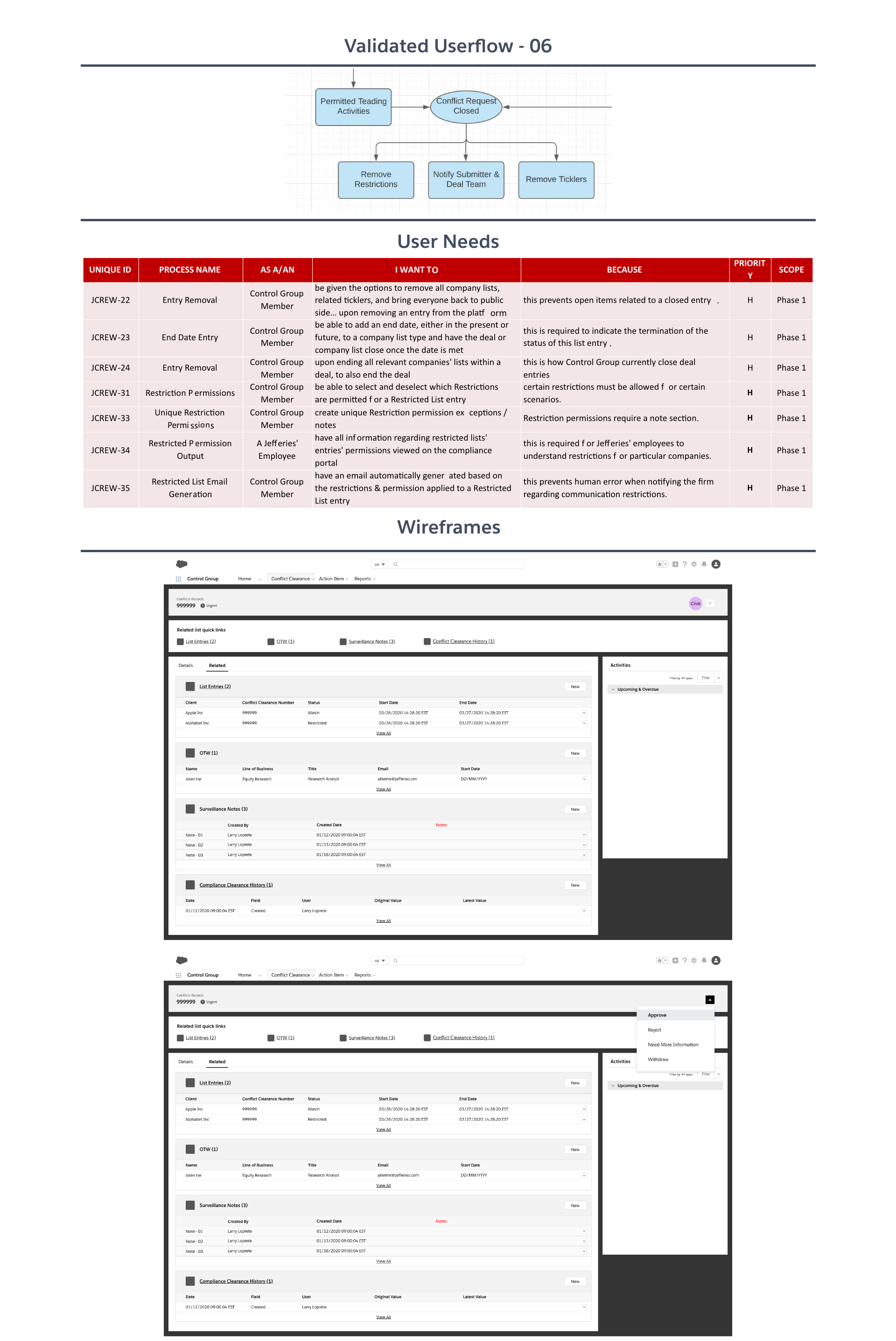
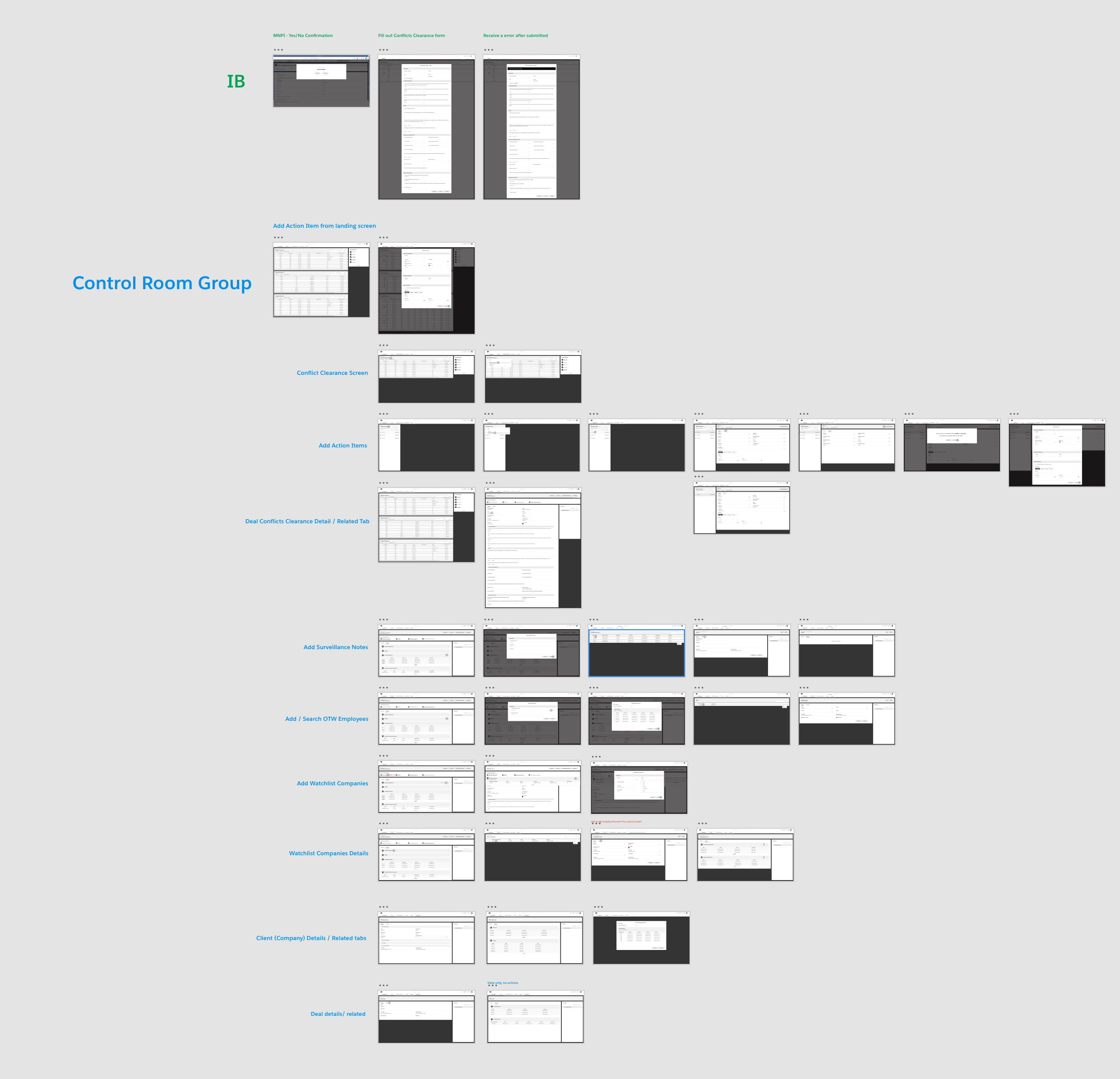
I ran through the 8 main features with Control Group users and did several iterations based on feedback. The clients were very pleased with the final result and felt a sense of ownership since they were a key part of the process.
Here are the details of the scenarios:
Banker check off “MIPI has been received”
Banker submits Conflict Clearance Request (CN-0001) as highly urgent
Control Group User views Request on Dashboard
Control Group User picks up Request (CN-0001)
Control Group User reviews all data on the submitted form and checks off the 7 steps required from conflict clearance, providing comments for each step
Company A is new and needs to be linked externally, and selects securities
Control Group User assigns clients within Request to company statuses (Company A - Watch List, Company B - Restricted List)
Control Group User edits Company B’s restriction permissions
Control Group User edits(1) OTW employee to request.
Control Group User Approves the Request (CN-0001) and provides comments: “Approved - Conflicts Managed”